

Updated FASD Information is Now Reaching Future Ontario Educators
From outdated assumptions → to current, practical, brain-based understanding
This September, as students and educators return to school and we recognize FASD Awareness Month, I am celebrating a meaningful step forward.
Earlier this winter, while talking with a friend, Ian Rome who was attending Teacher’s College as a second career, I learned that there was mention, but not much time spent on Fetal Alcohol Spectrum Disorder within the curriculum for teachers in training. He suggested that I purchase the textbook to be clear. So I did, and I learned that the eighth edition of Special Education in Ontario Schools contained FASD information that was significantly outdated. The material focused largely on fetal alcohol syndrome, visible physical characteristics, severity and intellectual disability. It risked leaving educators with the impression that FASD is rare, obvious, and associated primarily with significant alcohol exposure.
That understanding does not reflect what current research—or families and professionals—know today.
I reached out to the authors immediately proposing that they consider adding an insert and offering resources and opportunities for FASD specific content to be added to their curriculum. It just so happened that plans were underway for a 9th edition of the textbook that was expected to be printed before the start of the next school year. What followed was a fast, generous collaboration with authors Sheila Bennett, Tiffany L. Gallagher, Monique Somma and Margo Horne, supported by expert review (from members of FASD Ontario Network of Expertise, and people with living experience) to ensure the contribution was evidence-informed, research-based and useful in real classrooms.
THE RESULT
A new multi-page contribution—“Key Facts About Fetal Alcohol Spectrum Disorder (FASD)”—now appears in the ninth edition, with practical information intended to spark curiosity, challenge misconceptions and help educators recognize when a student may need a different kind of support.
What Changed?
The difference between the two editions is substantial.
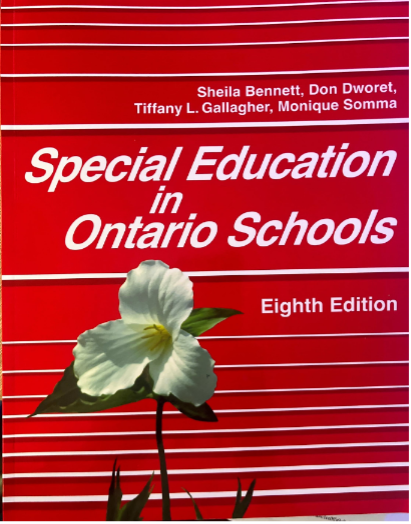
EIGHTH EDITION
The older lens
Centred “FAS” and “FAE,” terminology no longer used in the same way in Canada
Emphasized visible physical features and “severe” presentations
Linked the discussion closely to intellectual disability
Could leave readers believing FASD is uncommon and easy to identify

NINTH EDITION
A more accurate starting point
Explains FASD as a common, lifelong, brain-based disability
Highlights that more than 90% do not have the sentinel facial features
Uses current prevalence and diagnostic-access information
Connects brain-based needs to practical, inclusive classroom strategies
ONE FACT EVERY EDUCATOR SHOULD KNOW
FASD is not rare. At least 4% of Canadians—about 1 in 25—are impacted. Statistically, educators should expect students with FASD in their classrooms, whether diagnosed or not.
Why this matters for teachers—and families
Parents tell me regularly that educators do not understand FASD. Research and lived experience reinforce that concern. Yet this is not about blaming teachers. How can educators be expected to understand a complex disability when accurate FASD information has often been absent from post-secondary teacher education—or when the resources available to them have been outdated? It is also important to note that although I am focusing on teachers right now, the evidence is clear that every helping profession is in similar circumstances. Post-Secondary Schools include very little if any accurate up-to-date information about FASD.
Reference: Missed Opportunities? Screening for and Diagnosis of Fetal Alcohol Spectrum Disorders by Military Family Physicians–Published August 2026 as an example.
The new contribution helps teachers see that a student may be verbal, creative and capable while still struggling with working memory, executive functioning, sensory processing, emotional regulation, transitions, or applying learning consistently. What looks like defiance, carelessness or lack of motivation may actually be a brain-based difficulty requiring support, structure and a different approach.
A win for classrooms, students and families
When educators receive accurate information, everyone benefits:
A win for educators: fewer power struggles, more effective strategies, better referrals and reduced burnout.
A win for students: greater emotional safety, dignity, belonging, regulation and engagement.
A win for caregivers: less blame, fewer crisis calls and stronger collaboration with schools.
MISSION ACCOMPLISHED
The goal of this two-and-a-half-page contribution was not to teach everything there is to know about FASD. It was to be clear, pointed and memorable—to help new teachers realize that FASD will be present in their classrooms and that learning more can change outcomes. We did that. We moved the needle.
We are celebrating—and still asking what comes next
I am over-the-moon happy and a little proud that this information is now included. I am also aware that FASD remains positioned within a chapter on intellectual and developmental disabilities, while separate chapters address mental health, emotional and behavioural disabilities, ADHD and autism spectrum disorder.
FASD is more prevalent than autism spectrum disorder, Down syndrome, Tourette syndrome and cerebral palsy combined. It affects learning, mental and physical health, regulation, relationships and daily functioning across the lifespan. It deserves deeper and more visible attention in educator preparation.
Progress does not have to be perfect to matter. This edition represents an important opening—and an invitation to keep going. We are extending our thanks to the author’s and especially Monique Somma for their dedication to ‘getting it right’.